Article by By David Kershaw, Heavylift & Project Forwarding International, 13 March 2026:
The project forwarding network space has become increasingly congested over the past decade. For the Worldwide Project Consortium (WWPC), longevity and structure remain its key differentiators.
The consortium was established to create a transparent and fair platform “with the members and for the members”, said its director Wolfgang Karau. The aim had never been “to create a money-making business model by collecting all kinds of charges from our members”. Instead, the network was formed to be a useful tool for the project forwarding industry, supporting users involved in worldwide industrial projects.
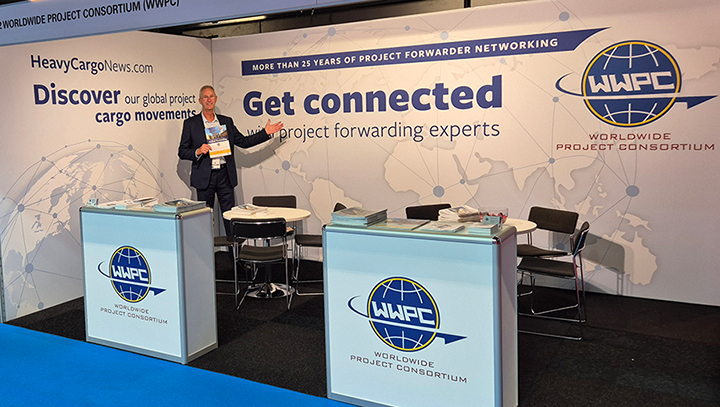
“We invoice once a year, and that covers all activities – marketing, annual conferences and trade fairs with our own booth. There are no hidden costs.”
Founded more than 27 years ago, WWPC operates on an exclusive territory model, allowing only one member per country or designated area. Karau argued that this structure protected members from internal competition and reinforced quality standards. “Many have been with us from the start. Everybody knows one another, and what trust and combined strength can achieve,” he said.
In a market where multinational forwarders have continued to expand through acquisitions, Karau explained that independent project specialists can retain a competitive edge. While larger groups may offer balance-sheet strength and payment guarantees, he believes independent forwarders bring local expertise and hands-on project management capabilities that cannot be replicated easily.
WWPC’s proposition is to combine that expertise under a unified global brand; members can leverage the consortium’s marketing presence to demonstrate worldwide reach while retaining independence in their home markets.
Karau confirmed that WWPC remained open to potential strategic partnerships, provided any development would strengthen members’ market access and bargaining power. “We are open to add muscle and market power to the ownership of the network for anyone interested and who can make use of our structure for their own purpose and thus gain more business for our members,” he said.
At a time of geopolitical volatility, Karau’s message was one of stability: a long-standing, territorially exclusive network positioning independent specialists to compete globally. “Project forwarding is unpredictable and cannot be converted onto a spreadsheet with ease,” he noted. “In-house expertise in project management and physical execution remains essential.”
Heavy Cargo News highlights the achievements of experts in the heavy cargo industry.
HeavyCargoNews.com
Latest issue